About the Author
Gabriel Undici is a Lancashire writer whose stories are rooted in Accrington, Oswaldtwistle and the surrounding mill towns.
The name Gabriel Undici didn’t arrive with thunder; it came quietly, the way most important things do.
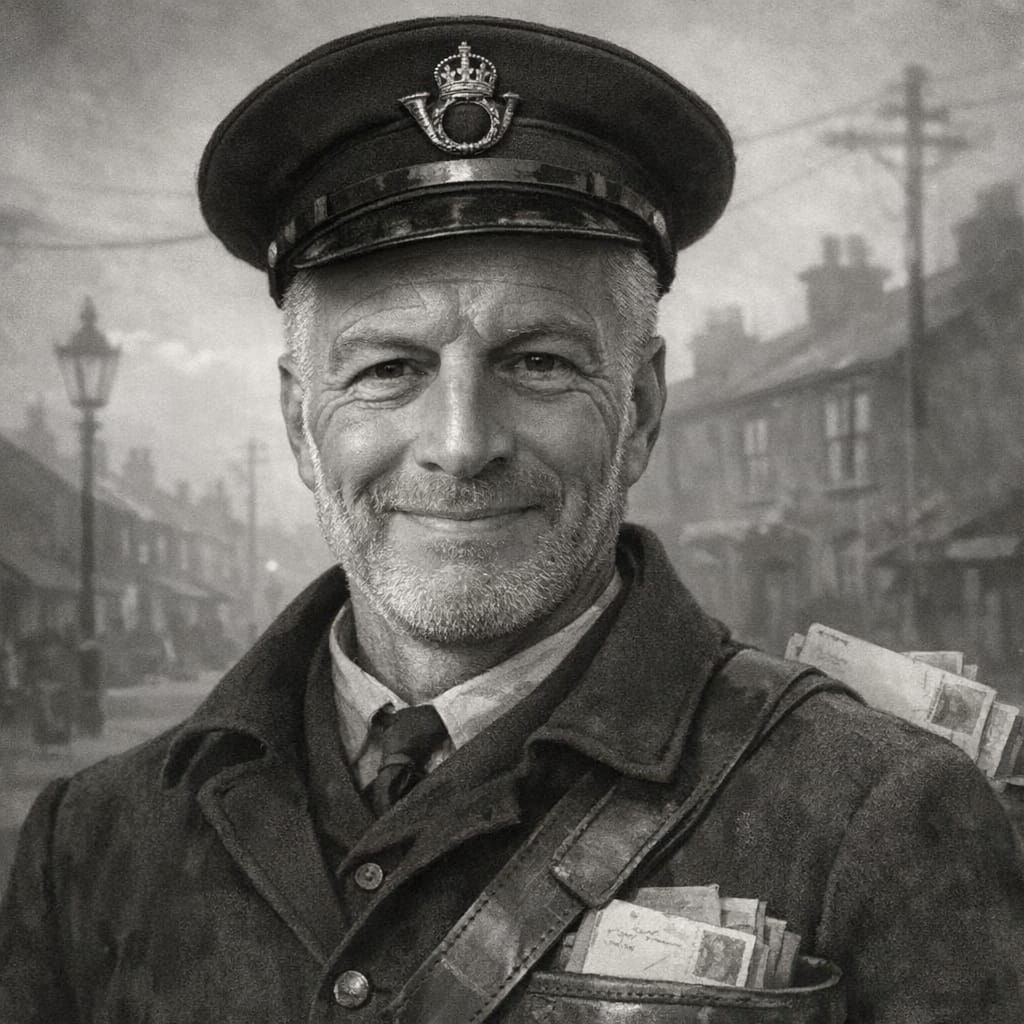
Chris Whalen — the postman who knows every back alley and ginnel from Ossy to Accy (Now Based in Millom Cumbria) — always had a fascination with the number 11. Eleven steps to his gate. Eleven stops on his favourite tramline. Eleven letters in a name he once saw carved into an old wooden bench near Cocker Lumb. Little things, the sort that stick in the mind without explanation.
When the novel Mind The Trams began to take shape, Chris felt he needed a name not just for a book, but for a presence — something that could hold the story, the memories, the ghosts, and the characters that whispered through the writing.
He chose Gabriel for the guide — the quiet voice that leads without forcing, the watcher on the edge of the dancefloor, the man who turns up precisely when the story needs him. A name with wings.
He chose Undici — Italian for eleven — as a nod to his lifelong pull toward that number. A reminder that stories often come in pairs: the seen and the unseen, the writer and the whisperer.
Together, Gabriel Undici became less a pseudonym and more a partnership: Gabriel Undici the eleventh Angel.
Chris, the postman with his boots on Lancashire soil.
Gabriel, the unseen collaborator with an eye for love, loss, and the magic hidden in ordinary places.
And perhaps the truth is this:
Gabriel Undici isn’t one person — he is the space where two imaginations meet.
The number 11 marks the doorway.
Why I wrote Mind The Trams.
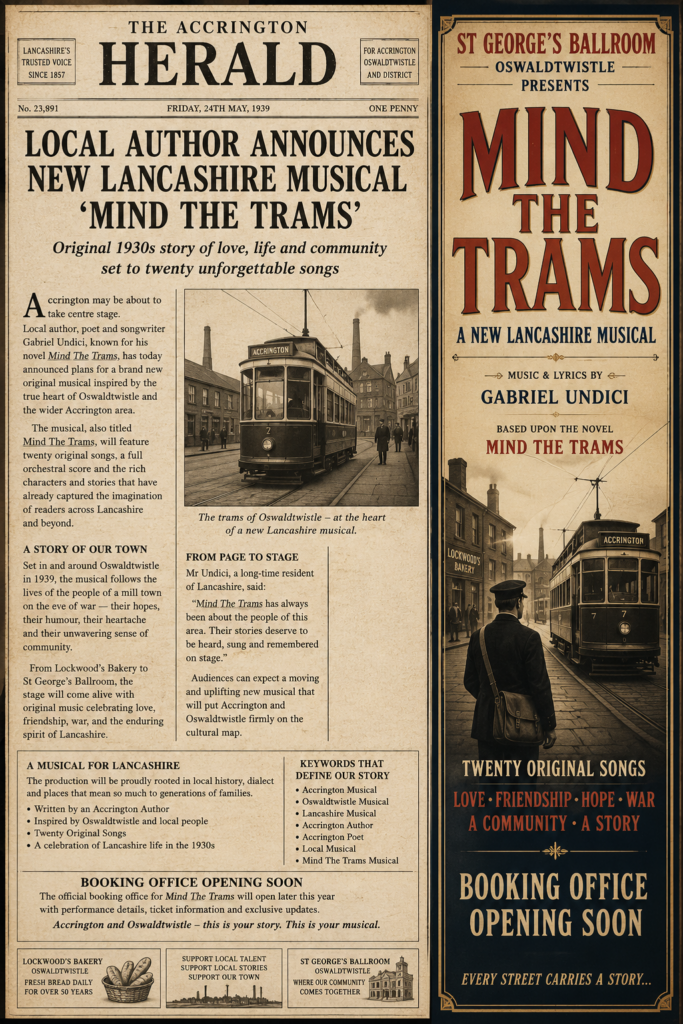
Oswaldtwistle has a way of holding on to you. Not loudly. Not obviously. It lingers — in mills, in back streets, in the spaces between what used to be and what never quite arrived. Mind the Trams grew out of that quiet persistence.
The story came from ordinary lives: a bakery counter, a dance card, a tram ride taken without thinking it might be the last. I wanted to write about people who rarely get written about — those who carried on, kept going, loved quietly, and disappeared without ceremony.
This isn’t nostalgia. It’s not a history lesson either. It’s a reminder that the past was once as uncertain and fragile as the present.
If there’s a single idea behind the book, it’s this:
ordinary days matter, because you never know which one will change everything.