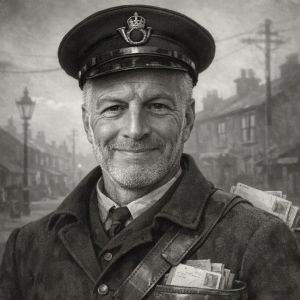
When discussing wartime history, attention often focuses on military campaigns and political decisions. Yet for millions of people, the war was experienced far from the battlefield.
Civilian experiences during wartime form some of the most moving and relatable stories in historical fiction. They remind readers that ordinary men and women faced uncertainty, loss, separation, and change while attempting to maintain a sense of normal life.
Mind The Trams begins before the outbreak of World War II, introducing readers to a Lancashire community living through its final period of peace. By establishing the hopes, friendships, and routines of its characters, the novel highlights what is at risk when conflict arrives.
For civilians, wartime often meant adapting to circumstances beyond their control. Communities changed, relationships were tested, and familiar routines disappeared. Yet people continued to work, support one another, and find moments of joy despite difficult circumstances.
Historical fiction allows modern readers to appreciate these experiences on a personal level. Statistics and dates tell us what happened, but stories help us understand how it felt.
By focusing on civilian lives, novels can explore themes of resilience, loyalty, friendship, and endurance. These human qualities often define an era just as much as the larger events recorded in history books.
Understanding civilian experiences during wartime helps us see history not only as a sequence of events, but as the collective story of countless individual lives.
Leave a Reply