What is a donkey stone? Discover the Lancashire tradition of donkey-stoning doorsteps, its mill-town history and why it appears in Mind The Trams.
What Is a Donkey Stone? A Lancashire Tradition
If you grew up around the mill towns of Lancashire, the words donkey stone may immediately bring back memories of scrubbed front steps, terraced streets and considerable pride in keeping the front of the house respectable.
For everybody else, the name probably requires some explanation.
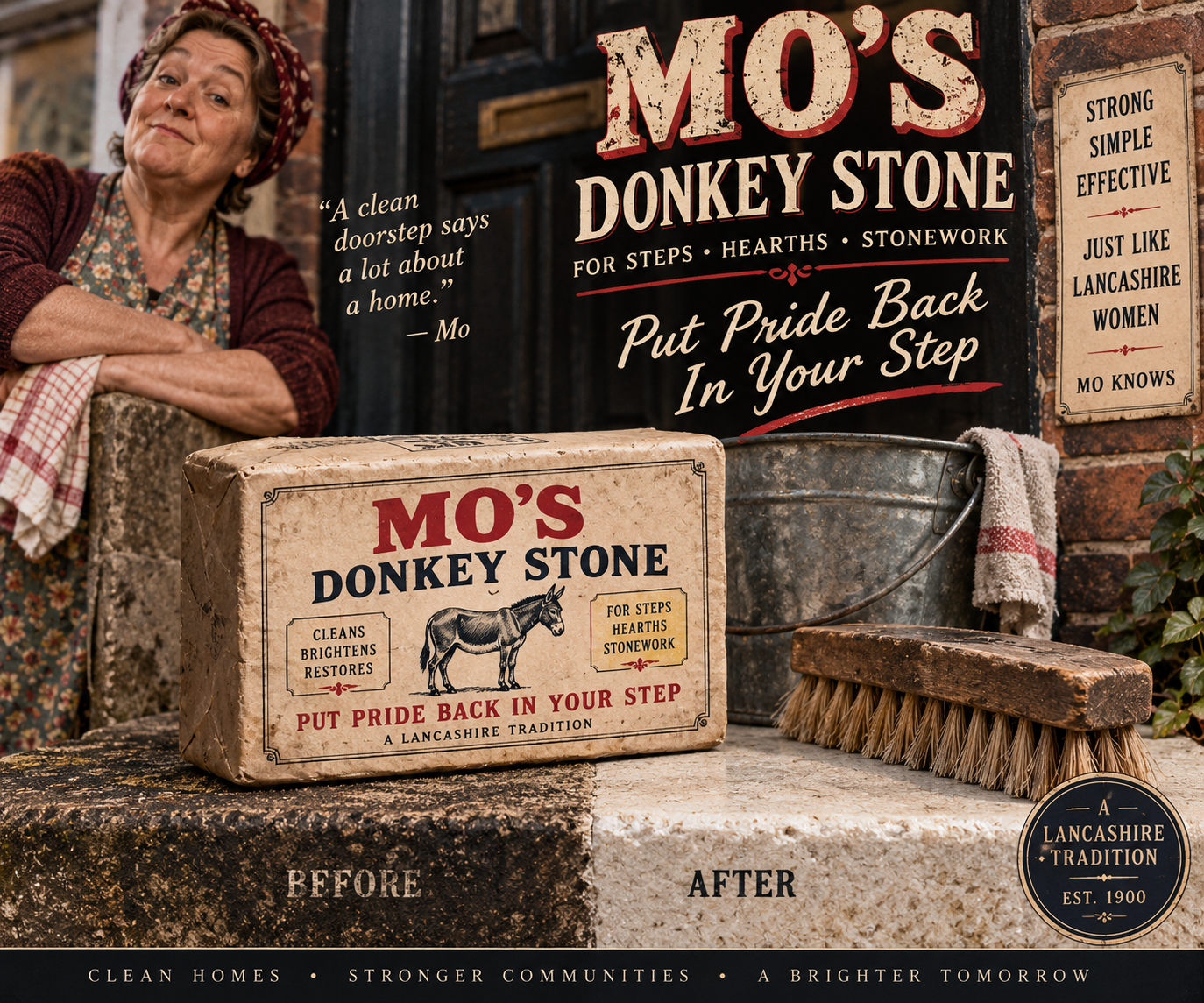
A donkey stone was a small scouring block, usually around the size of a large bar of soap, traditionally used on stone steps, hearths, floors and window ledges.
The practice became particularly associated with the industrial towns of Lancashire and Yorkshire.
Why Was It Called a Donkey Stone?
Despite the name, donkey stones weren’t made from — or particularly connected with — donkeys.
The name is generally traced to Edward Read & Son of Manchester, an early manufacturer that used a donkey as its trademark. Other manufacturers used different animals, including lions and ponies, but “donkey stone” eventually became the familiar generic name.
From Lancashire Mills to Lancashire Doorsteps
Donkey stones were originally used on greasy stone staircases in textile mills, where they helped create a less slippery surface.
Their use subsequently spread into homes.
A doorstep would be washed before the dampened donkey stone was rubbed along the stone, leaving a contrasting finish when dry. Keeping a beautifully stoned doorstep became a visible expression of household pride — and apparently sometimes a source of competition between neighbours.
For many Lancashire families, “doing the step” became part of ordinary domestic life.
Donkey Stones in the 1930s
The donkey stone belongs particularly well in the world of Mind The Trams.
Historical material from the Social History Curators Group states that production reached its height during the 1930s, when approximately 2.5 million stones were being produced each year.
So in 1939 Oswaldtwistle — among mills, terraced houses and soot-darkened streets — a donkey stone would have been an entirely familiar household object.
Which brings us to Mo.
Mo’s Donkey Stone
While researching the everyday objects surrounding Mind The Trams, I wanted to include things that would once have been completely ordinary but are now in danger of disappearing from memory.
#MindTheTrams #Lancashire #Oswaldtwistle #Accrington #LancashireHistory
Leave a Reply